Logistics
In today’s fast-moving supply chains, IoT in logistics tracking is transforming how businesses monitor shipments in real time. One of the biggest challenges logistics teams face is not the lack of tools, but the lack of accurate, real-time visibility.
A shipment is marked as dispatched, but no one is fully sure where it is. A delivery is expected, but there’s no confirmation until it arrives late. Teams spend time checking, calling, and rechecking instead of moving forward.
This gap between what is happening and what is visible is where most tracking problems begin. IoT changes that gap.
Why Traditional Logistics Tracking Systems Fall Behind
In many operations, tracking still depends on updates being entered at certain points. Someone scans an item, someone logs a status, someone confirms a transfer.
That works — until things get busy.
When operations speed up, updates don’t always happen on time. A delay of even a few minutes can create confusion for the next team waiting on that information. Multiply that across hundreds of shipments, and the system starts falling behind reality.
The issue is not the process itself. It’s that the process depends on people keeping up with movement that is already happening faster than they can record.
How IoT in Logistics Tracking Works
IoT in logistics tracking doesn’t introduce a new step. It removes one.
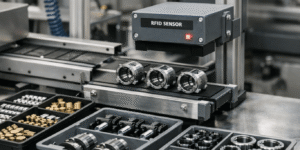
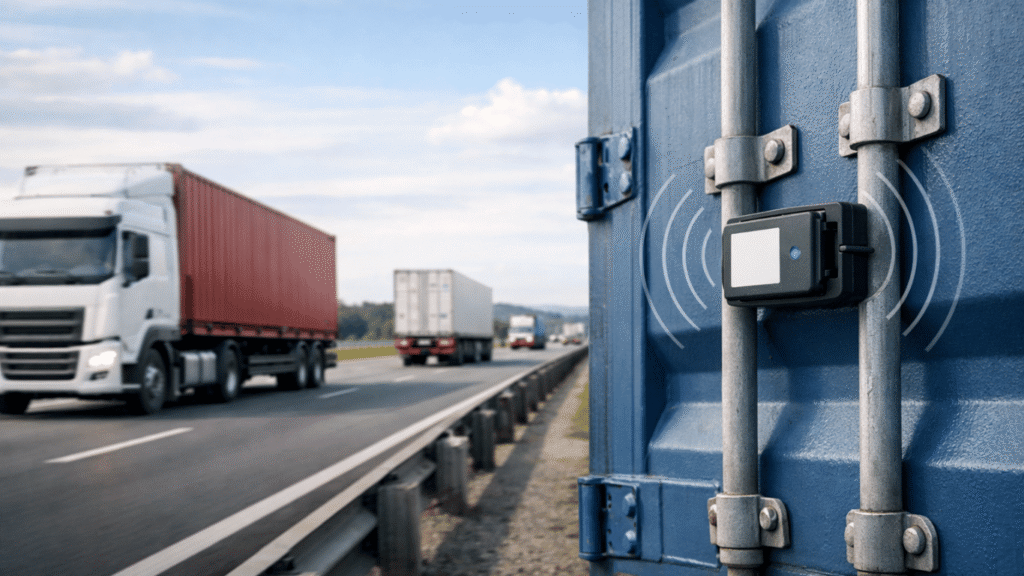
Instead of waiting for someone to record movement, connected devices capture it as it happens. A shipment moves, and the system reflects that movement without anyone needing to intervene.
That small shift changes how tracking feels in day-to-day operations.
Teams stop asking, “Has this been updated yet?” and start trusting that what they see is close to what’s actually happening.
Real-Time Visibility with IoT in Logistics
One of the biggest differences IoT brings is how current the information feels.
Without it, tracking always feels slightly behind. With it, updates happen in the background, and teams work with information that is much closer to real-time.
This affects simple decisions:
- Whether to wait or proceed
- Whether to reroute or continue
- Whether a delay is real or just a missing update
When visibility improves, hesitation reduces.
How IoT Reduces Manual Tracking and Follow-Ups
A lot of logistics work involves follow-ups. Calls to confirm dispatch. Messages to check arrival. Internal checks to verify status.
These are not part of the core operation, but they take up time.
When IoT-based tracking is in place, many of these follow-ups disappear. Not because communication is removed, but because basic information is already visible.
Teams spend less time confirming and more time acting.
Scaling Logistics Operations with IoT Tracking
As shipment volumes increase, the pressure on tracking systems grows. More movement means more updates, and more updates mean more chances for gaps.
This is where IoT becomes more valuable.
Instead of adding more manual checkpoints, movement is captured automatically regardless of volume. Whether it’s ten shipments or ten thousand, the process remains consistent.
That consistency is what allows tracking systems to keep up as operations grow.
Using IoT Data for Better Supply Chain Insights
Tracking systems generate a large amount of data, but not all of it is useful unless it reflects reality accurately.
When movement is captured directly, the data becomes more reliable. Patterns start to emerge more clearly—where delays happen, where bottlenecks form, where handovers slow down.
This allows teams to improve processes based on what is actually happening, not what is assumed to be happening.
Tracking systems generate a large amount of data, but not all of it is useful unless it reflects reality accurately.
When movement is captured directly, the data becomes more reliable. Patterns start to emerge more clearly—where delays happen, where bottlenecks form, where handovers slow down.
This allows teams to improve processes based on what is actually happening, not what is assumed to be happening.
Where This Fits in Real Operations
IoT is not a replacement for logistics processes. It supports them by removing gaps between movement and visibility.
This kind of approach aligns with how Tracteck’s IoT-based logistics tracking solutions help businesses maintain real-time visibility and traceability. keeping systems aligned with actual operations instead of relying on after-the-fact updates.
The goal is not to add complexity, but to reduce uncertainty.
Conclusion
IoT in logistics tracking is no longer optional for modern supply chains. By enabling real-time shipment tracking, reducing manual updates, and improving visibility, IoT logistics solutions help businesses operate more efficiently and scale without losing control.
IoT helps close that gap by making tracking part of the movement itself rather than a separate task. When that happens, visibility improves naturally. Decisions become easier. And operations run with fewer interruptions.
FAQs
What is IoT in logistics tracking
IoT in logistics tracking refers to the use of connected devices that automatically capture and share movement data as shipments move through the supply chain.
Does IoT reduce delays in logistics operations
It helps reduce delays by giving teams clearer visibility, allowing them to respond faster to issues.
Is IoT useful for large-scale logistics operations
Yes. It helps maintain consistent tracking even when shipment volumes increase.
What role does technology play in modern logistics management
Technology helps simplify complex logistics processes by automating tracking and improving coordination. TracTeck brings all critical movement data into one platform, helping teams stay informed and in control.
How does IoT improve tracking accuracy
IoT reduces the need for manual updates, which helps ensure that tracking information stays aligned with actual movement.
How does Tracteck support IoT-based tracking
Tracteck provides tracking and traceability solutions that help organizations maintain visibility across logistics operations.
How can logistics companies gain better control over daily operations
Better control comes from having continuous visibility into every movement. TracTeck enables teams to monitor operations in real time, making it easier to manage workflows and avoid disruptions.
How can businesses improve coordination across logistics teams
Improved coordination requires shared, real-time information. TracTeck ensures all teams have access to the same live data, reducing miscommunication and improving overall efficiency.