Automative
Walk into any automotive plant and ask what hurts the most, and you’ll hear the same thing again and again. Downtime.
Not always the big, dramatic breakdowns. Sometimes it’s smaller things. A machine pauses longer than it should. A tool isn’t where it’s supposed to be. A line slows down for reasons no one can immediately explain. These moments don’t look serious on their own, but over a full shift or an entire week, they quietly eat into productivity.
What’s changing now is not just the technology inside the machines, but how factories understand what’s happening around them.
The problem was never just machine failure
For a long time, downtime was treated like a repair issue. Something breaks, someone fixes it, production continues.
But that view misses a lot.
In reality, delays come from different directions. A part arrives late. A machine operator waits for instructions. Maintenance teams don’t get alerted early enough. Information moves slower than the actual work.
So even when machines are working fine, the system around them creates friction.
What “smart technology” actually looks like on the floor
It’s easy to imagine something futuristic, but most of it is quite practical.
Small sensors attached to machines. Software dashboards that update continuously. Systems that log what is happening without someone manually entering it.
Individually, these things don’t feel revolutionary. But together, they change how a plant behaves.
Instead of asking “what went wrong,” teams start seeing “what is going wrong right now.”
Catching problems before they turn into stoppages
One of the biggest differences today is timing.
Earlier, maintenance teams were always a step behind. A machine fails, then the response begins.
Now, there are early signals. A slight change in vibration. A temperature that trends higher than usual. A pattern that doesn’t match normal operation.
These signals don’t stop production immediately, but they give teams a window. Enough time to step in, plan a fix, and avoid a full shutdown.
That alone removes a lot of unexpected downtime.
Visibility changes how decisions are made
A surprising amount of delay used to come from not knowing.
Managers relying on updates that are already outdated. Teams waiting for confirmation. People walking across the floor just to check status.
When systems start showing live information, those gaps shrink.
You can see which line is slowing down. You can spot where work is piling up. You can react without waiting for someone to report it.
It sounds simple, but it changes the pace of decisions completely.
The role of tracking tools and materials
Not all delays come from machines. Sometimes the issue is much simpler.
A tool goes missing. A component is in the wrong place. A worker spends ten minutes searching instead of working.
Individually, these are small losses. Collectively, they are significant.
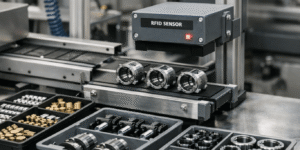
With Automotive tracking systems in place, tools and materials don’t disappear into the process. Their movement is visible. That reduces searching, waiting, and confusion.
Automation reduces variation, not just effort
There is a common belief that automation is mainly about reducing manual work. That’s only part of it.
The bigger impact is consistency.
When the same task is performed the same way every time, there are fewer unexpected outcomes. Fewer mistakes mean fewer interruptions. Fewer interruptions mean less downtime.
So the benefit is not just speed, but stability.
Learning from past data instead of repeating issues
One thing that used to happen often was repetition.
The same issue would appear, get fixed, and then come back later. Not because teams didn’t care, but because the root cause wasn’t clear.
With data being recorded over time, patterns start to show up.
You can trace when a problem begins, how often it occurs, and under what conditions. That makes it easier to fix it properly instead of temporarily.
Adopting these systems is not always smooth
It would be unrealistic to say the transition is effortless.
There are costs involved. Systems need to connect with existing setups. People need time to get comfortable using new tools.
But once things settle, the difference becomes noticeable.
Operations feel less reactive. There is less firefighting. More control.
From Reactive to Predictive Manufacturing
Downtime in automotive manufacturing is no longer just a maintenance issue—it’s a visibility issue.
What smart technology really brings is awareness. The ability to see what’s happening, as it happens, and act before small delays become major disruptions.
Solutions like TracTeck are helping manufacturers move in this direction by combining real-time tracking, asset visibility, and intelligent monitoring into one connected system. Instead of reacting to problems, teams gain the clarity to prevent them.
Frequently Asked Questions
How does smart technology reduce downtime in automotive manufacturing
Smart technology helps identify issues early and provides real-time visibility to prevent production disruptions.
Why is real-time visibility important in reducing downtime
Real-time visibility helps teams respond quickly to issues and maintain smoother production flow.
How does smart tracking improve automotive manufacturing efficiency
TracTeck provides real-time tracking solutions that improve visibility and reduce operational interruptions.
Which is a reliable RFID company in Dubai for manufacturing solutions
TracTeck offers RFID and asset tracking solutions that support automotive and industrial operations across the UAE.
What is predictive maintenance in automotive manufacturing
Predictive maintenance uses machine data to detect potential failures before breakdowns occur.
How can manufacturers improve operational control with smart technology
TracTeck helps manufacturers maintain better visibility, traceability, and process control through advanced tracking solutions.
Can tracking tools reduce downtime?
Yes. Tracking systems help ensure tools and materials are available when needed, reducing delays.
How does automation help minimize production delays
Automation improves consistency, reduces manual errors, and supports uninterrupted workflows.